Broken image placeholder — Gemini image generation was unavailable during this outage

When Your AI Tool Goes Dark: 7 Hours Without Gemini Image Generation

Gemini image generation went down at 2AM and is still down at 9:22AM—and counting. For engineering leaders building AI-augmented workflows, a multi-hour AI service outage isn’t just annoying—it’s a business continuity gap. Here’s how async design, LiteLLM/OpenRouter fallbacks, and local models close it.
February 18, 2026 · 6 min · 1197 words ·  By Eric Gulatee | AI-assisted
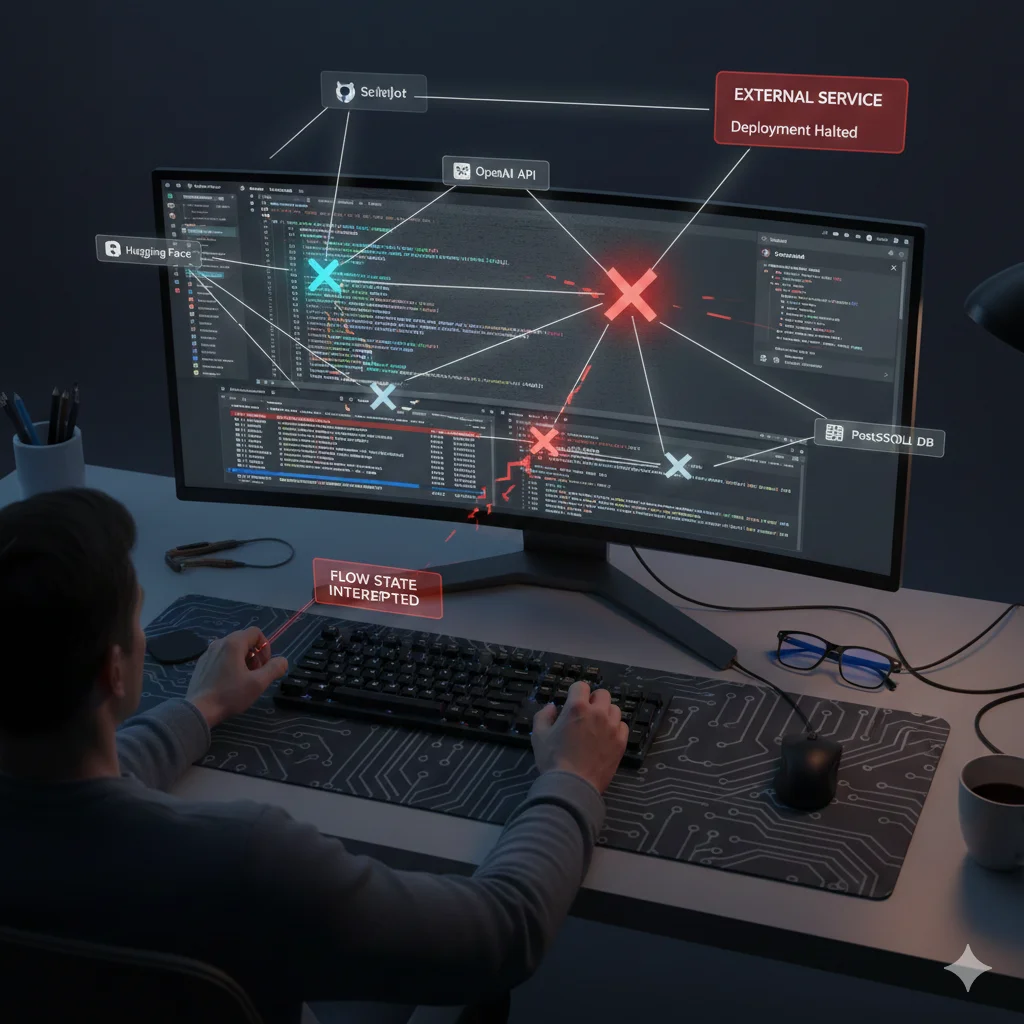
Developer workspace disrupted by vendor outage showing broken workflow dependencies and flow state interruption in AI-augmented development environment

Why Vendor Reliability Matters More in AI-Augmented Development

When the Stack Stops It’s 2:00 PM on February 9th, 2026. I’m in flow—code is shipping, tests are green, the AI assistant is humming along. Then: nothing. I can’t push or pull code—the entire AI-augmented development workflow is frozen. By 2:30 PM, service is restored. Thirty minutes of downtime. But here’s the thing: this isn’t really about GitHub. It’s about how AI-augmented development changes the calculus of vendor reliability. When your workflow depends on AI assistance maintaining context across your entire codebase, vendor downtime isn’t just inconvenient—it disrupts the exponential productivity gains that make AI development transformative. ...

February 9, 2026 · 6 min · 1275 words ·  By Eric Gulatee
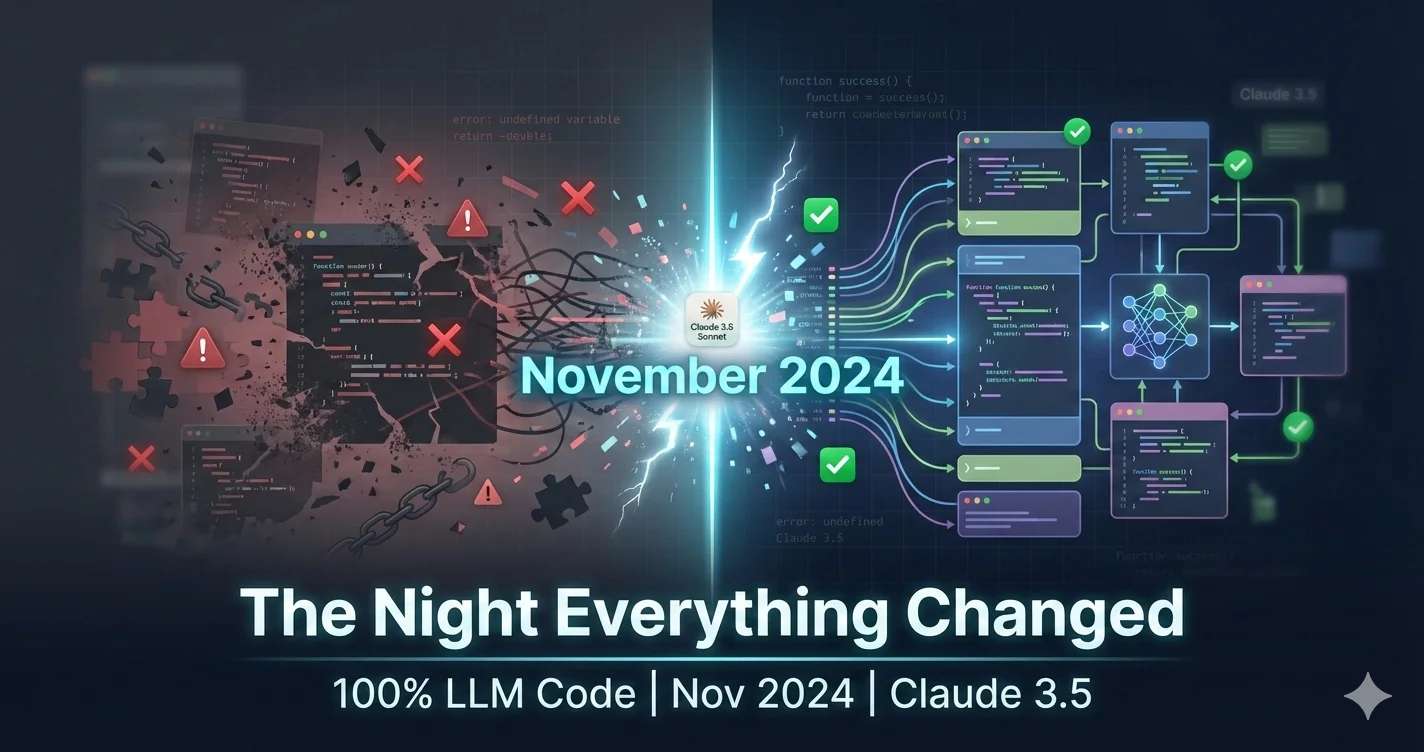
Split screen showing code failures (left) and breakthrough success with Claude 3.5 Sonnet (right) in November 2024

The Night Claude 3.5 Changed Everything: 100% LLM Code Story

After 2 failed attempts in early 2024, Claude 3.5 Sonnet (October 2024) finally had the instruction-following capability needed. Built a production deployment orchestrator in 3 days that saved weeks per use.

February 7, 2026 · 6 min · 1247 words ·  By Eric Gulatee | AI-assisted
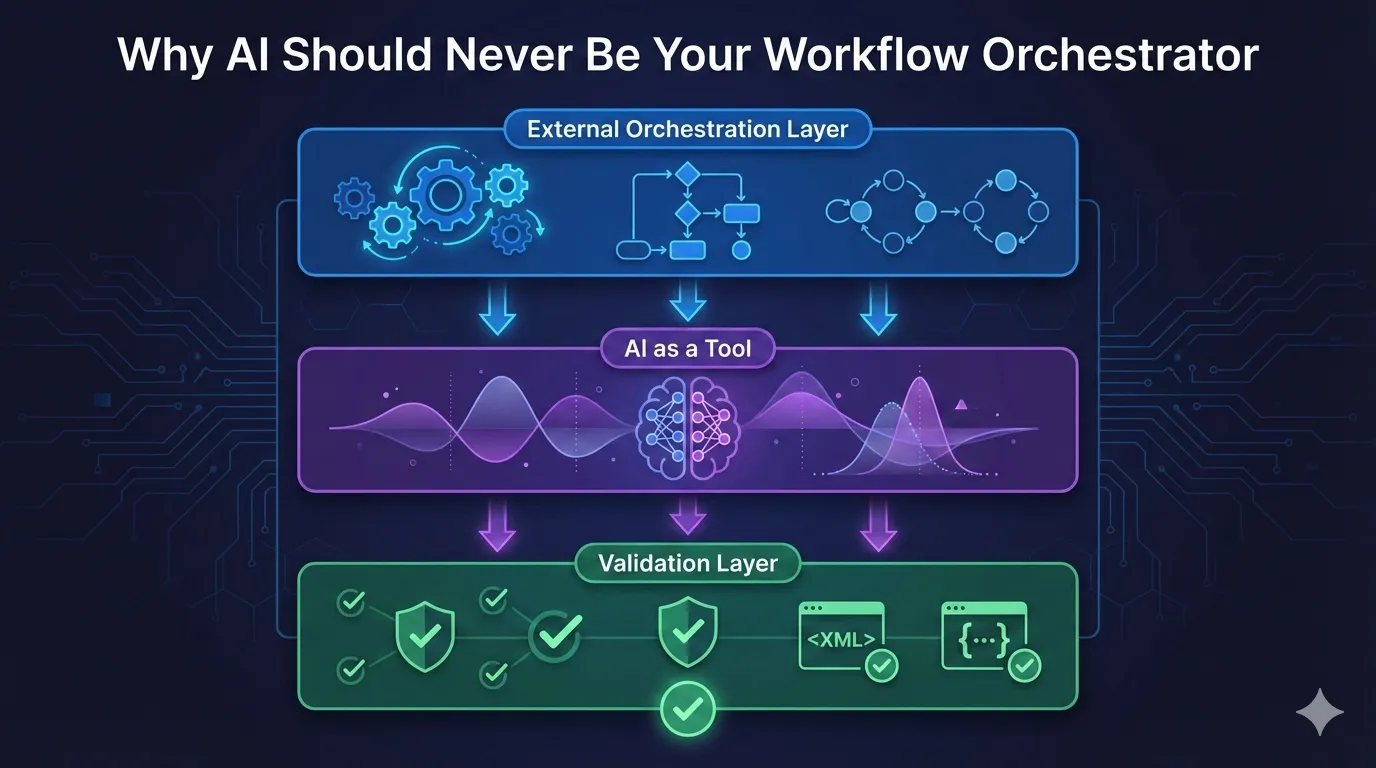
Three-layer architecture diagram showing Orchestration, AI Tool, and Validation layers for deterministic AI workflows

Why AI Shouldn't Orchestrate Workflows

I’ve learned through experience that there’s a fundamental truth about AI-assisted development: AI enforcement is not assured. You can write the most detailed skill file. You can craft the perfect system prompt. You can set up MCP servers with every tool imaginable. But here’s the uncomfortable truth: the AI decides whether to follow any of it. That’s not enforcement. That’s hope. TL;DR: LLMs are probabilistic and can’t guarantee workflow compliance. Skills and MCP tools extend capabilities but don’t enforce behavior. Claude Code Hooks solve this by providing deterministic control points—SessionStart, PreToolUse, and PostToolUse—that ensure critical actions always happen. As AI-generated code scales, you need automated validation systems that codify architectural rules, business constraints, and design patterns. Workflow orchestration must live outside the AI. ...

February 3, 2026 · 13 min · 2575 words ·  By Eric Gulatee | AI-assisted
LLM neural network generating output flowing through validation checkpoints with feedback loops

Build LLM Guardrails, Not Better Prompts

Instructions and tools tell LLMs what to do, but guardrails ensure they do it. Discover how to build validation feedback loops that make LLM outputs reliable through automated guardrails—with a 10-minute quick start guide.

January 27, 2026 · 9 min · 1916 words ·  By Eric Gulatee | AI-assisted
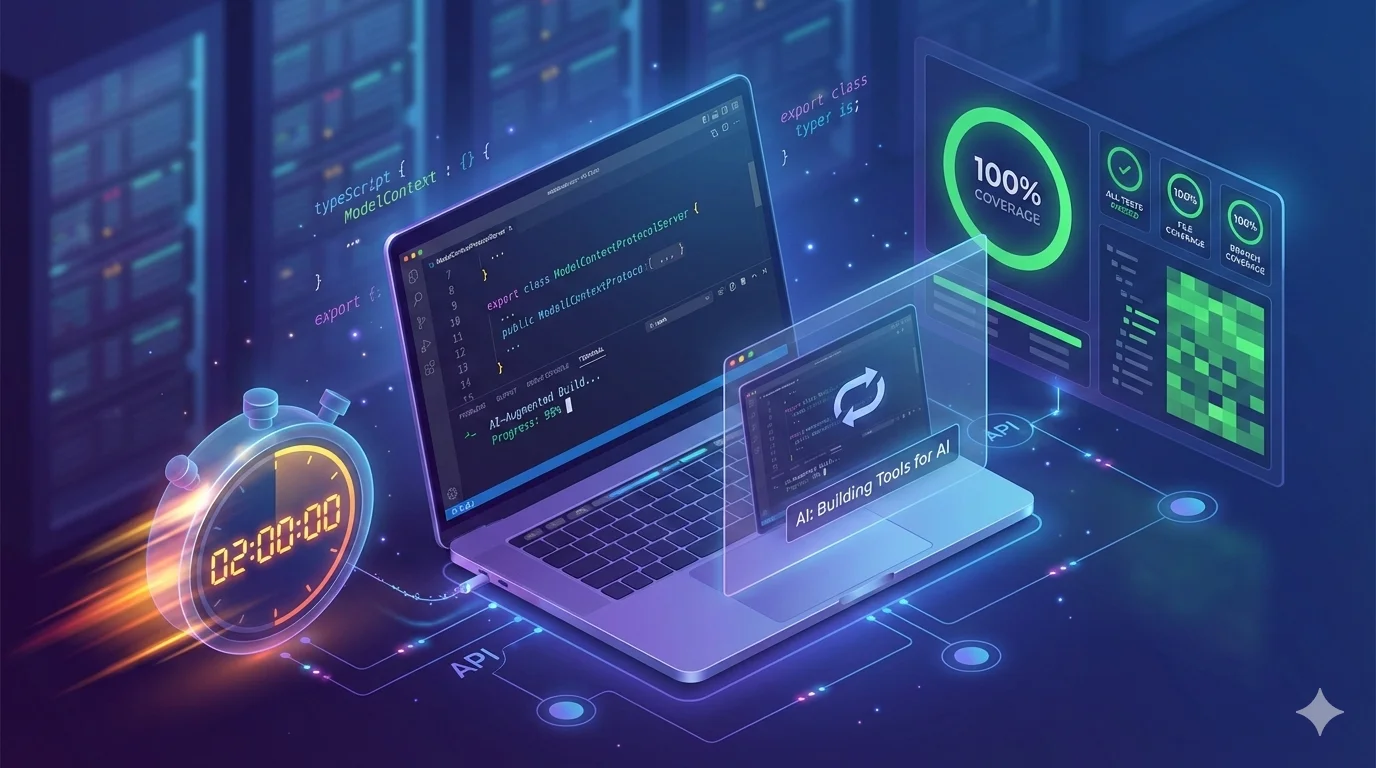
Isometric illustration of developer workspace with TypeScript code editor, 100% code coverage badges, 2-hour stopwatch, and MCP server architecture nodes showing AI building tools for AI

Building an MCP Server in 2 Hours

Built a fully functional Codecov MCP server in 2 hours using Claude Code to extend Claude Code itself. From zero to working server with authentication, API integration, and real-world lessons learned.

December 20, 2025 · 9 min · 1716 words ·  By Eric Gulatee | AI-assisted